



Mastering Price Action: Advanced Trading Concepts
Smart Money Concepts (SMC)
Written by NonyaXBT
A complete 120-page practical guide to institutional-grade trading using Smart Money Concepts. This book teaches retail traders how to read and trade like “smart money” (institutions) by decoding the Interbank Price Delivery Algorithm (IPDA), liquidity engineering, market manipulation, and precise price action in crypto, forex, and indices.

Core Philosophy
Traditional “buy/sell pressure” is incomplete. IPDA deliberately manipulates price to:
- Create liquidity above/below old highs and lows
- Fill inefficiencies (Fair Value Gaps)
“Smart money” exploits these engineered moves. SMC is not a magic formula — it’s a flexible framework requiring patience, journaling, narrative-building, and resilience.
Key Definitions (Chapter 1) include:
- OB = Order Block
- FVG = Fair Value Gap
- BOS = Break of Structure
- BISI/SIBI = Buyside/Sellside Imbalance
- PD Arrays, AMD (Accumulation-Manipulation-Distribution), and many more.
Time Zones (Chapter 2): Focus on UTC-4 (NY time) — London & New York Kill Zones are critical.
Daily & Market Bias (Chapter 4)
Daily bias is a framework, not a rigid prediction.
- Midnight NY open price = key reference
- “Lion’s portion” of daily range forms ~2 AM–10 AM NY
- Bullish bias → buy at/near or below open, target daily high (liquidity draw)
- Combine AMD across timeframes + weekly range analysis
- Market manipulation & institutional overflow: institutions engineer stop-hunts
- Use market structure + economic calendar + clear narrative for robust bias
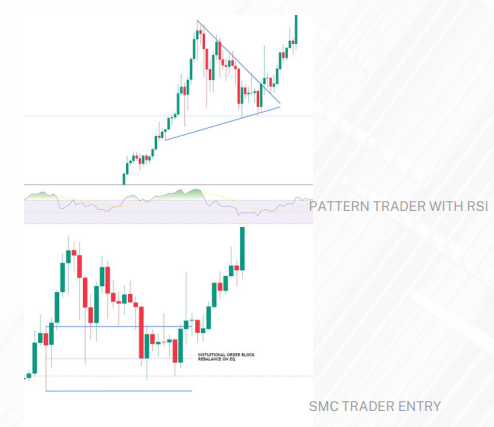
Pro Tip: Journal your weekly bias daily (Discord-style channels for charts, results, FVGs, etc.).
Market Structure (Chapter 5)
The “roadmap” of peaks and valleys (fractal across timeframes).
- Bullish: Higher highs + higher lows
- Bearish: Lower highs + lower lows
Shifts (MSS): Trend change signals. Confirm with HTF bias and target FVGs or old highs/lows in premium range.
Breaks & BOS: Violation of prior high/low = potential reversal. Use liquidity matrix (premium vs discount) for exits.
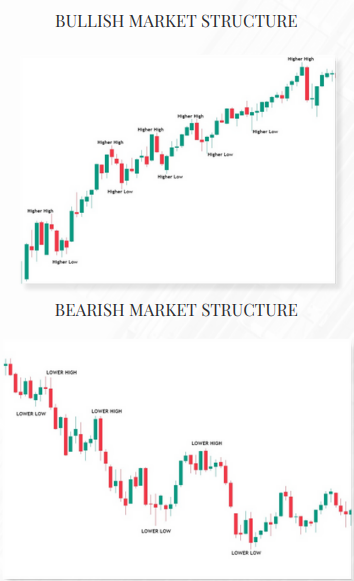
Key Rule: Wait for natural shifts using old/clean highs/lows + session liquidity (Asian/London/NY).
PD Arrays & Premium vs Discount (Chapter 6)
PD Arrays = institutional price levels stored in IPDA logic (precise levels, not zones).
- Premium = price above fair value → sell zone
- Discount = price below fair value → buy zone
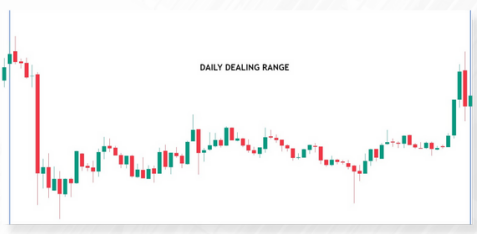
On daily charts: Split dealing range in half (above 50% = premium, below = discount).
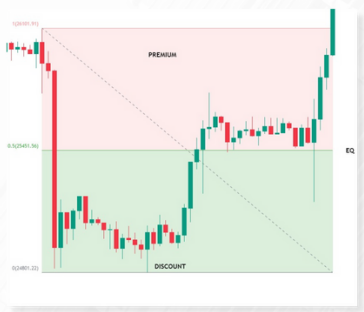
Dealing Range: Created by liquidity grabs → new swing high/low. IPDA hunts internal range liquidity first.
Order Blocks (OB) (Chapter 6.5)
Large accumulation of orders at a specific level (last candle before market-structure shift).
- Bullish OB: Support (last down candle before bullish shift)
- Bearish OB: Resistance (last up candle before bearish shift)
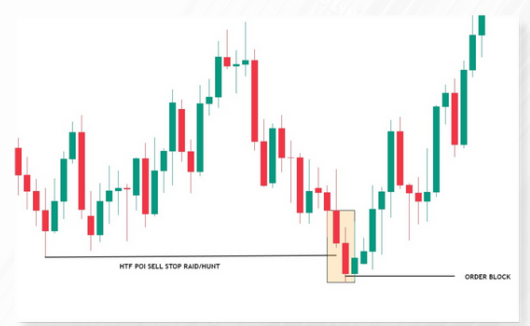
Quality improves with adjacent FVG or displacement. Trade breakouts or reversals at these levels.
Fair Value Gap (FVG) (Chapter 7)
Three-candle inefficiency where price “skipped” fair value.
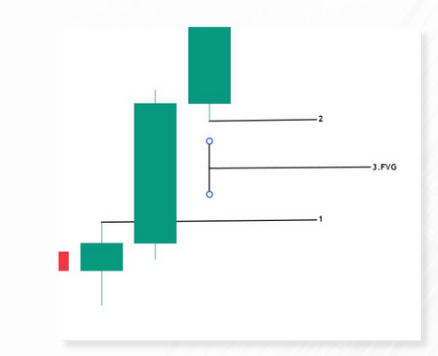
- Bullish FVG acts as support
- Bearish FVG acts as resistance
Efficient gaps often lead to continuation.
Power of Three (AMD) (Chapter 8)
Classic SMC cycle:
- Accumulation (quiet building at discount)
- Manipulation (fakeouts/stop-hunts to trap retail)
- Distribution (offloading at premium)
Trading Model & Daily Approach (Chapters 11–13)
Timeframe Awareness: HTF for narrative → LTF for entry.
Core Rules:
- Buy at discount, sell at premium
- Seek confluences: OB + FVG + BOS + liquidity + session timing
- Risk management, RR, SL/TP
- Daily routine: Check calendar, map PDL/PWH, identify bias
Mindset: “The biggest battle is against your own mind.” Discipline and continuous learning win.